Journal / Journal
Why Spontaneous Talk is the Ultimate Brain Food for Kids
Beyond screen-time limits: Why the "conversational bridge" is critical for child development. Explore the MIT and Harvard-backed science proving that unscripted back-and-forth talk—not apps—is the key to cognitive growth and emotional resilience in the digital age.
Thomas O'Connell · April 3, 2026
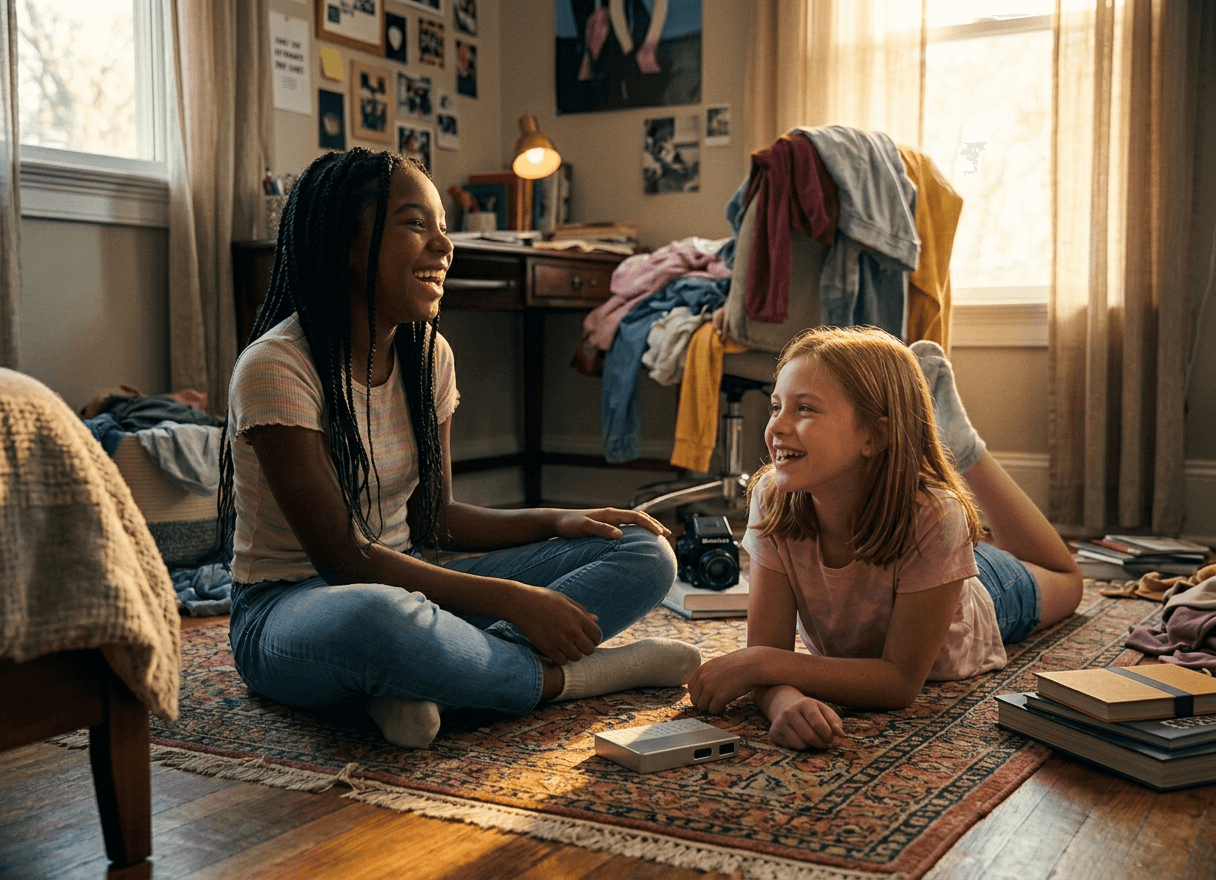
We spend a lot of time obsessing over milestones: when did they walk, how many words do they know. But there is a silent metric that often carries more clinical weight than any flashcard: spontaneous conversation.
We aren't talking about directives or reporting. We're talking about the unscripted, meandering, why-is-the-moon-following-us kind of talk. In clinical circles, this back-and-forth is known as the conversational bridge.
The neuroplasticity of the back-and-forth
A landmark study from MIT and Harvard proved that it isn't just the number of words a child hears that matters, but the number of conversational turns. Every time a child waits for a response, processes it, and pivots their thought, they are performing a high-level brain workout.
Executive function in live theater
Spontaneous conversation is the live theater of executive function. A child has to hold an idea while the other person speaks, wait their turn, and change their topic based on new information. When they are staring at a screen, these functions are largely dormant.
Protect the open air
Spontaneous talk usually happens in the in-between moments — the car ride, the grocery line, the quiet fifteen minutes before bed. When we fill those gaps with digital noise, we aren't just keeping them busy; we are cutting the conversational bridge.
The most advanced piece of technology in your child's life is their own voice. Let's make sure they get the chance to use it.